



Jacob Elordi and Oscar Isaac: Beautiful creatures
By Ruben V. Nepales
LOS ANGELES – In Guillermo del Toro’s “Frankenstein,” The Creature does not look like the previous cinematic depictions of Mary Shelley’s Gothic character – hideously ugly, heavily stitched, with a monstrous head. Instead, Victor Frankenstein’s creation in the 2025 film is, yes, pale, but with a haunting look, and looking like an ethereal version of Jacob Elordi, who, in fact, plays the scientist’s (Oscar Isaac) monster.
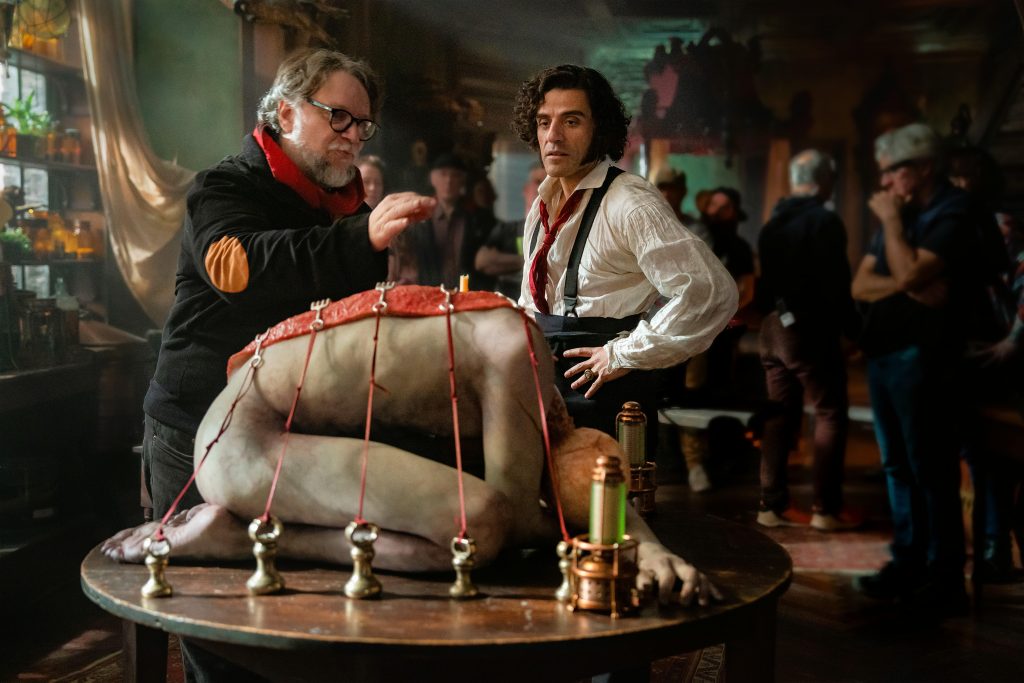
And that was del Toro’s intention. “I wanted The Creature to be a newborn. A lot of the interpretations of The Creature, visually, are almost like accident victims, and I wanted beauty,” said the filmmaker in the press conference at this year’s Venice Film Festival where “Frankenstein” premiered.
Referring to his previous films, del Toro explained, “So, I based the creature in ivory and alabaster statues which I’ve been ‘rehearsing,’ if you saw ‘Cronos’ or ‘The Devil’s Backbone.’ ”
The respected Mexican filmmaker added, “I’ve been ‘rehearsing’ that look for a long time, but I also said, no stitches. Victor is an artist. And if he’s been dreaming of this for 20 years, he would make a perfect, beautiful thing. We based the head on the phrenology diagrams in the 1800s, and the body, we tried to make sense of the lines of cutting with surgery, but also beauty.”
So, in this case, the creature and creator, Elordi and Isaac, respectively, are both beautiful visages.
Del Toro pointed out, “We were doing the lines like you would streamline a car – like this line flows with the cheekbone and this and that, and also, ultimately, every set and every design, if you watch the movie, they change every time they appear. The Creature in the beginning is a baby. It’s like a newborn, almost an embryo. It’s translucent and fragile and this and that.
“Then the hair comes, the wardrobe changes, the explosions changing and scarring him, and the beauty of this is that the character is revealed through that. And finally, the thing that I, as a kid, always kept thinking in my mind, first of all, the hair is different colors because it comes from different scalps.
“But I always say, why didn’t Victor take one half and one half or a third and a third (of scalps), and the answer I found is, it’s war. Everything is fed from basically spare pieces. So that made logic for the story, the context, and the design.”

Elordi not only comes across as a handsome creature, a radical departure from grotesque film incarnations including those by Boris Karloff, Bela Lugosi, and Christopher Lee, but speaks with a beautiful Yorkshire accent.
“David Bradley, who plays the Blind Man, is from that part of the world,” Elordi cited Bradley’s character who teaches The Creature about language and the world. The Australian actor, noted for “Priscilla” (he played Elvis Presley), “Saltburn” and “Euphoria,” and Isaac attended the Venice press con with del Toro. “So, when The Creature learns to speak, there are little bits and bobs (of Yorkshire accent).”
Isaac’s Victor Frankenstein is also a departure from previous portrayals of the man as a mad scientist. But first, the Guatemalan-Cuban thespian admitted that he was still amazed he landed the title role in a Guillermo del Toro epic.
“I can’t believe that I’m here right now. I can’t believe we got to this place from two years ago, sitting at your (to Guillermo) table, eating Cuban pork, just talking about our fathers and our life, to him saying, ‘I want you to be Victor.’
“And then not really being sure if it was true, if I was just dreaming it. It just seemed like such a pinnacle, and then for Guillermo to say, ‘I’m creating this banquet for you. You just have to show up and eat it.’ And that was the truth.”
The actor, whose roles include Poe Dameron in “Star Wars: Episode VIII – The Last Jedi,” continued, “There was like a fusion. I just hooked myself into Guillermo, and we flung ourselves down the well. It really is a testament to how much you (Guillermo) were personal and poured your heart into it, and that allowed all of us to want to do the same thing.”
“It is a process of surrendering to the material in some ways, and it’s about finding a way to fall in love with whatever it (screenplay) is so much that you’re willing to give over to it completely.”
On his version of Frankenstein, Isaac cited, “We (he and del Toro) really, early on, approached Victor as more of an artist, even by the way he expresses himself, the way he dresses, the way he moves. And less of a scientist, so it comes from a much more painful place. Ultimately, it is about outsiders, people who feel they are on the outside.”
“I certainly am thinking about the type of roles that I get attracted to. I’ve always felt kind of behind a glass darkly, not really participating but just right on the outside. So, this film feels particularly personal in that way. It asks like, how do you live with a broken heart, and what do you do with a broken heart? And often, cruelty happens out of broken hearts.
“It seems trite, but it really does move to that place of, everything that is happening is coming from a place of trying to control the aftermath of having a heart just completely broken. And so, in that way, Victor feels like a very sensual character as well.”
Del Toro shared, “For me, there is a great line in the movie that Elizabeth (played by Mia Goth) says, like most tyrants, he (Victor) believes himself to be a victim. If you talk to the great despots in history, they will say they are the underdog. They will tell you, ‘Oh, no, it’s a tragedy that is a lack of insight, that’s all.’ A lack of insight is a lack of communication.”
Elordi said that he joined the production after the filming began because of a previous commitment. “Guillermo came to me pretty late in the process. It was about nine weeks (into ‘Frankenstein’) for Guillermo, and I was finishing ‘The Narrow Road to the Deep North’ with Justin Kurzel in Australia. I had about three, four weeks before I got to filming.”
“So, it presented itself as a pretty monumental task, but like Oscar said, the banquet was there and everyone was already eating by the time I got there. So, all I had to do was just join in, pick up a seat, and it was a big, warm, comfy seat. It really was like a dream come true.”
Asked who the real-life monsters in the world today are, Elordi quoted his filmmaker: “Guillermo said, ‘It’s the men in well-tailored suits.’ ”
As to what drew him to the role, certainly one of his most memorable performances, Elordi replied, “It was a vessel that I could put every part of myself into, from everything that’s unconscious, from the moment that I was born to being here with you today. All of it is in that character and in so many ways, the creature that’s on screen in this movie is the sort of purest form of myself.”
“He’s more me than I am, and I think as a performer, if you can achieve that, if you can find yourself in a character that you plan to get lost in, that’s a really beautiful thing that can happen. And that’s what happened to me. I’m only realizing that now, sort of in hindsight.”
“Frankenstein” received a standing ovation in Venice that was estimated to be around 13 to 15 minutes. As del Toro, Isaac, Goth, and the cast beamed at the audience’s reaction, Elordi was visibly moved and misty-eyed.
‘In the Hand of Dante‘
Isaac was the man du jour at the film festival on the island of Lido since he also starred in another entry, Julian Schnabel’s “In the Hand of Dante.” The crime-drama-mystery, based on Nick Tosches’ 2002 novel, imagines if a handwritten manuscript of Dante Alighieri’s “Divine Comedy” was found in the Vatican Library, but somehow it ends up in the hands of a mob boss in New York.
Isaac and the cast, including Gal Gadot, Jason Momoa, Gerald Butler, and John Malkovich, also play different characters when the story, written by Schnabel and his wife, Louise Kugelberg, shifts to the 14th century, as Alighieri (Isaac) is writing his masterpiece. Film greats Martin Scorsese and Al Pacino make cameo appearances.
On what attracts him to a difficult part like this in “In the Hand of Dante” – dual roles of the poet Alighieri and 21st century author Tosches – Isaac said, “That’s why we get into these kinds of things – to try to make the impossible dream. Something about moving towards the mysterious. It’s like reading it and having no idea how one would realize it.
“That’s what’s so exciting about it. And really, it’s Julian. He’s a visionary, and he is unlike any other artist who’s working today or has ever worked in film. So the opportunity to just dive into this impressionistic work is an intoxicating idea.”
The 2016 Golden Globe best actor in a limited series or a motion picture made for television winner for “Show Me a Hero” expressed delight in returning to Venice where crucial scenes in “In the Hand of Dante” were shot.
“Almost three weeks of filming were done here in Venice,” he recounted. “And that was the last time I was here. So it was amazing to arrive back here and have all those feelings come rushing back. It felt like a matter of plunging in and holding on and letting go. We moved so quickly and so fast from one incredible location and set of circumstances to the next as we did this basically ‘travelogue’ as we moved around Italy and New York.”
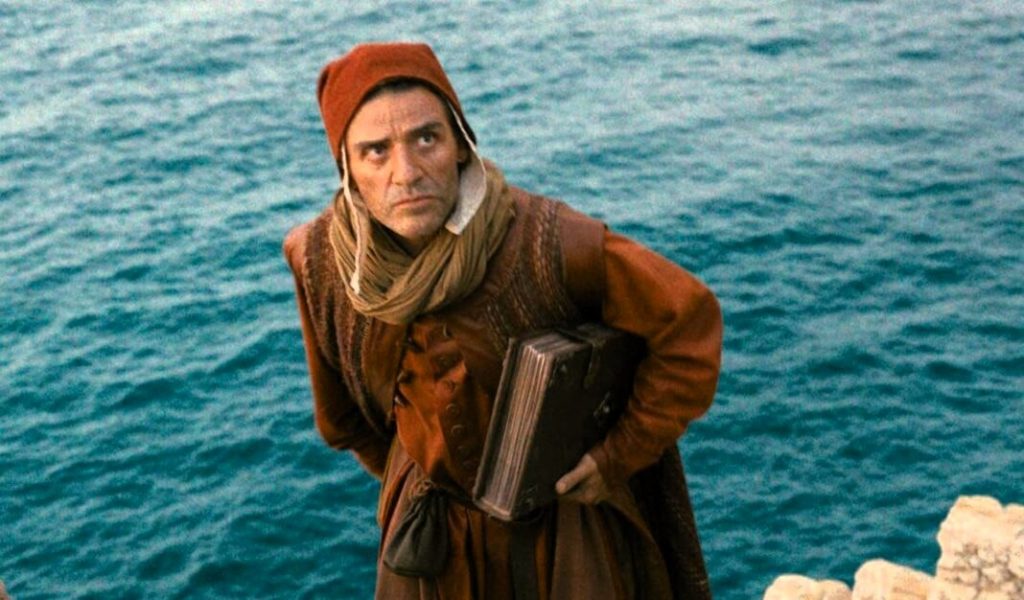
“Every night that I would come home, there was almost something Talmudic about the way that I would prepare at night,” the actor shared about how he prepared for his dual characters. “I would have, beside me, Nick Tosches’ book, Nick Tosches’ poetry, recordings of him and the Divine Comedy, three different translations in English, and then the original Italian.
“And depending on what we were shooting the next day, I would derive and divine from these texts to see what would be possible the next day, what maybe we could add in, what we could replace, what could just be there to be able to trust the one or two takes that we would be able to get before the light went, before we had to move on to the next place.”
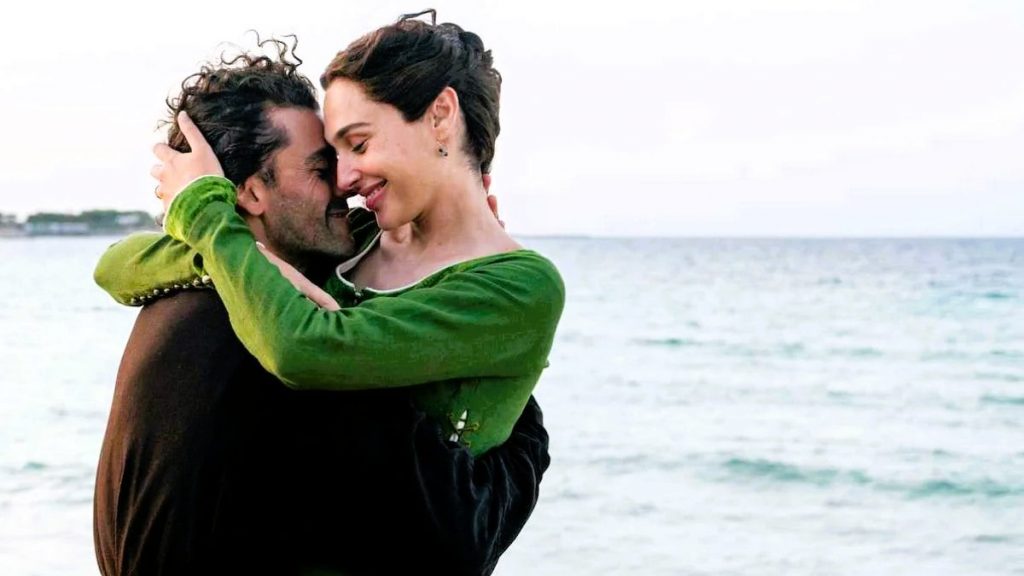
Isaac praised Schnabel, truly one of the nicest filmmakers. “I just also remembered how beautiful it was because no matter what time we finished, no matter what had gone down, as soon as I would get in the car to go home, the first call I would get in the car, minutes later, would be Julian calling to talk about the day, to say how incredible it was, to just give me support and to get me excited about the next day. I’ve never had that before, and I haven’t had that since.”
“Something that I keep that resonated a lot with me is the artist in exile,” Isaac revealed about identifying with his characters who are both artists. “And that there’s something about being in exile that maybe is necessary for the artist. I know that for me, there’s always been something that’s felt being on the outside of things, not really participating.
“So I think maybe even some of the sense of becoming the poem is some sense of belonging, finally, and that there’s something in the search for that.
“So Dante’s exile was quintessential for him. To be able to move through the space, there had to be space created to come back to. The fact that Nick Tosches is also writing about being in emotional exile and artistic exile in a world of commerce and how one comes home, that’s been something that stayed with me.”
“It is interesting because Julian makes movies about artists and the act of creation, which is difficult,” Isaac reflected. “That’s why it seems so impossible – how do you document inspiration? As an actor, I don’t see so much difference in the form that it takes – a stroke on the canvas and a moment in the take, and where something happens, it’s the same thing. It’s the same kind of ephemeral thing of having so much preparation and imagination and then letting go and seeing if grace happens. And so I see them as all coming from the same source.”
Oscar Isaac and Jacob Elordi, two beautiful beings talking about their art, what could be more inspiring?

GLEN
GLEN (Global Lifestyle and Entertainment Network) is a dynamic and trendsetting online magazine that captures the pulse of global entertainment, culture, and lifestyle particularly in pageantry.
Related Posts

Anne Hathaway
The devil wears what? Apparently, a Jean Paul Gaultier Femme pinstripe
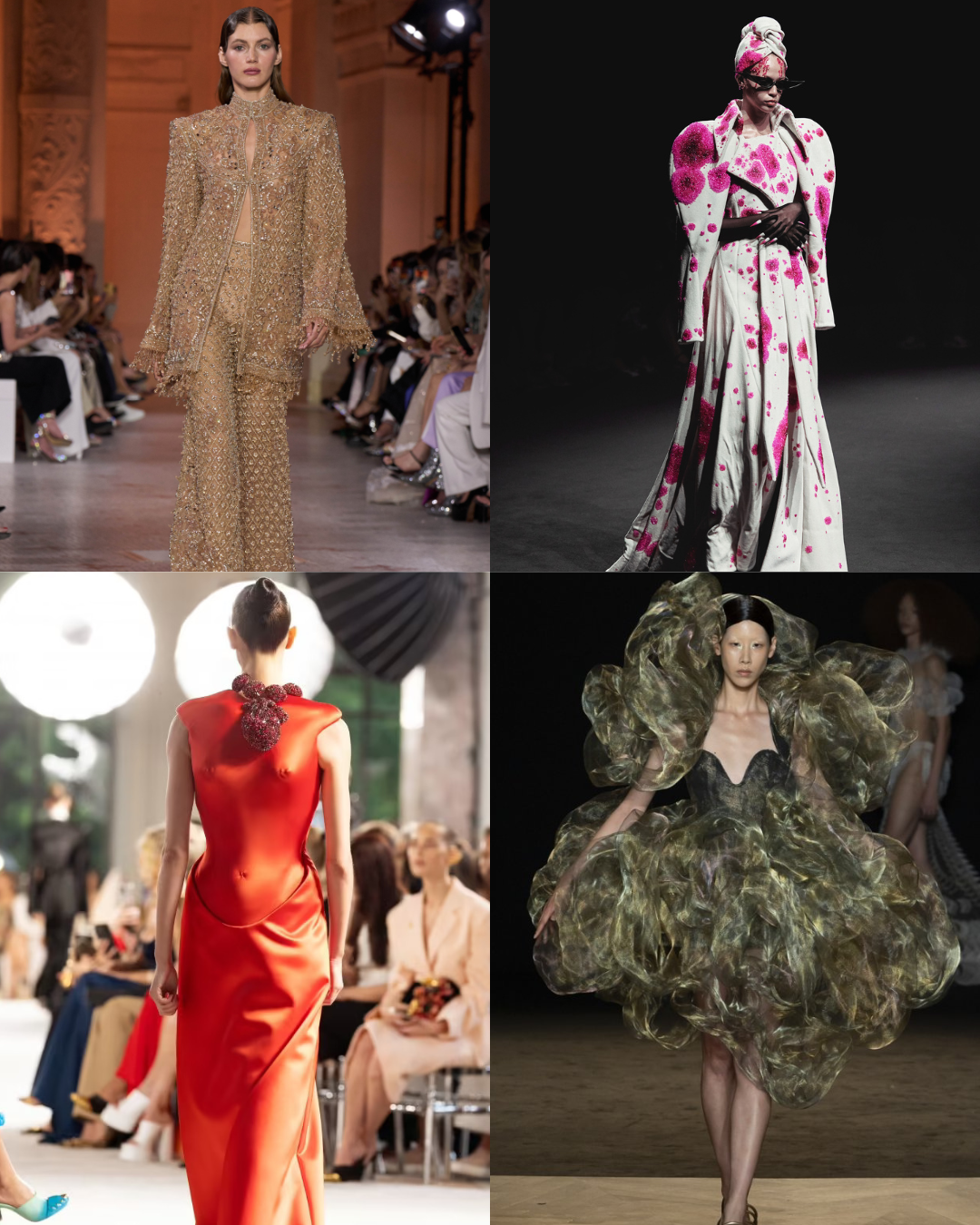
Silhouettes of fantasy
The transformative world of fall-winter 2025 haute couture By JOHN ROL

IRIS MITTENAERE
By John Legaspi The former Miss Universe turns heads in Tokyo with thi
Timothée Chalamet: An old soul, a thinking man’s sex symbol and a fashion icon
By Ruben V. Nepales LOS ANGELES – Timothee Chalamet has been various

Haute hues
Louis Vuitton redefines luxury beauty with its debut line, ‘La Beaut
Bold New Mood
After all the style festivities from the major fashion capitals, what